Still have questions about your acne breakouts even though your teenage years feel like a life time ago? You’re not alone…
Acne isn’t just a teenage thing. If only. While it’s estimated that around 85 percent of youngsters are plagued with acne throughout their teenage years, adult acne is on the rise. According to the American Academy of Dermatology, pesky pimples and blackheads currently affect about 15 percent of adult women. Some, who never even had a whiff of acne as a teenager, may even experience it for the first time during adulthood.
As if wrinkles and the menopause weren’t enough to contend with, right?
One of the biggest issues with acne is understanding what’s best for your skin before, during and after your breakout. Like, is it ever OK to squeeze that glaringly obvious blackhead? Or will wearing makeup make pimples worse?
Read on for five of the most common acne questions, answered – whatever your age!
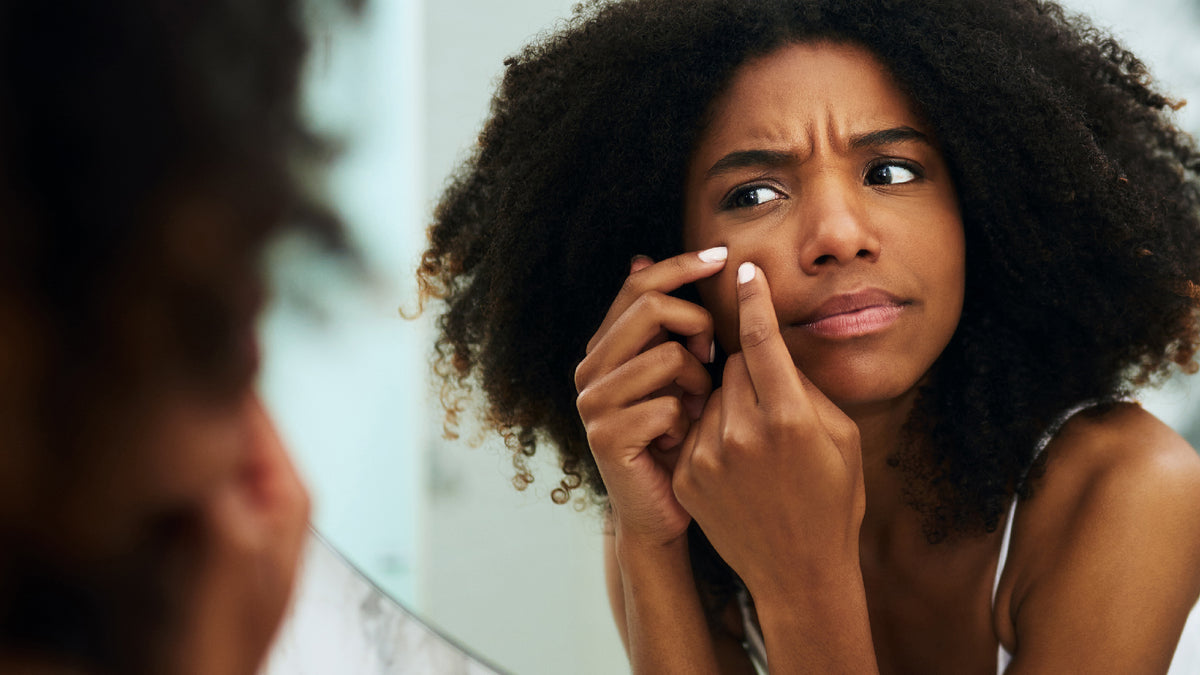
1. Is It Ever OK To Pop Pimples?
Truthfully, no. That said, we understand that it’s practically impossible not to squeeze, prod or poke at your pimples every now and again. Because we’re just as guilty as you are. Especially when it comes to those annoyingly obvious ones that look SO ready to go...
The problem, however, is that the risk-reward ratio is all off.
Squeezing your spots might seem harmless. However, not only do you run the risk of spreading infection – especially if you do it with unclean hands – but you can also encourage inflammation which, together, can make matters so much worse in the short-term. Reckon you’re OK with a bit of short-term pain and redness for a few days? Well, what if we throw in some potential long-term damage like post-inflammatory hyperpigmentation (dark spots) and/or permanent scarring? Not so harmless now, is it?
The only people who know how to effectively and safely pop pimples are dermatologists and trained skincare professionals. So our advice is to leave it to them – especially if you suffer with more noticeable acne like deep cysts. That being said, blackheads and whiteheads (which aren’t inflamed) can safely be tackled. But only if you understand a few simple ground rules.
First up, wash your hands before touching your face, then wrap your fingers in a clean tissue and use only light pressure to gently press the skin around and away from the blemish. If the head releases, success. If not, it’s not ready so leave well alone. Got it? Really? Then proceed with caution.
2. Does Diet Really Affect Acne?
Contrary to some people’s beliefs, acne vulgaris (the most common type) is not caused by chocolate, sugar or greasy, high-fat foods. It’s caused by an overproduction of sebum which blocks up your pores and often causes inflammation in the hair follicle. Whether or not your skin produces an excess of sebum is mainly down to your genes and hormones. Not what you eat.
But that’s not the full story. While, sure, your internal makeup is the primary reason for your skin type and sebum production, there are tons of dietary triggers that can impact the severity and frequency of your breakouts. Especially if you’re prone to acne in the first place.
Studies show that low GI foods which help prevent spikes in your blood sugar levels are great for helping to control acne. This means you should make sure to up your intake of things like beans, legumes, grains, green veggies and fruits. And while you’re at it try to lower anything that can cause an overload of sugar in your system because, yes, this can trigger hormonal imbalances which may cause your sebum levels to increase.
Omega-3 fatty acids found in oily fish like salmon and mackerel, as well as nuts and seeds, are also a wise move for acne-prone skin as they’ve been show to help reduce inflammation.
3. Acne Or Rosacea: How Can You Tell The Difference?
This is a tricky one and probably not something you can diagnose yourself – it’s one for the pros. However, since we’re here it’s worth pointing out that while they might look similar, rosacea and acne are two very different things.
While acne is often something that kicks off in your teenage years, rosacea usually doesn’t appear until your 20s or 30s when symptoms come and go seemingly at will. The real cause of rosacea is yet to be identified and it’s often misdiagnosed as acne, but acne is caused by overactive sebaceous glands whereas rosacea is thought to be linked to your vascular system.
Again, experts believe your genes are the main culprit at play, but another possible cause is your skin’s microbiome. This is a tiny ecosystem of harmless bacteria, viruses, fungi and mites which live on your skin and, when balanced, create the perfect environment to keep unwanted pathogens at bay. Studies have shown that people with rosacea have an overabundance of microscopic Demodex mites in their microbiome – sometimes up to four times as many as those without rosacea.
So, is there a way to tell the difference between acne and rosacea? Well, common signs are excessive redness and flushing – particularly on your cheeks, chin, nose and forehead; crusty bumps; burning; swelling and itching. Your skin may also become thicker and rosacea has even been known to cause dry eyes and blurred vision.
But as we said, you’re better off leaving it to the pros to do the diagnosis and give you a plan of action, OK?
4. Does Makeup Make Breakouts Worse?
Certain makeup (and skincare for that matter) can definitely make acne and oily skin worse so it’s worth doing a little check of all your cosmetics to see if anything needs to go.
Major offenders are comedogenic products which contain ingredients that have a tendency to block your pores. Heavy oils and rich ingredients like cocoa butter are no-nos, so if you’re breaking out more than normal and you have products that contain any of these occlusive ingredients, stop right away and switch to non-comedogenic or non-acnegenic products – these are way less likely to clog your pores.
Lightweight, oil-free foundations, concealers and tinted moisturizers are your best bet but, remember, if you have an open pimple, you should leave it well alone. Covering up an open zit can cause further irritation and will block its exposure to oxygen which is essential for healing.
5. What’s The Best Anti-Acne Ingredient For Mature Skin?
Easy: retinol.
But first, you must get into a gentle cleansing routine that keeps your sebum under control without stripping your skin dry. We love Tea Tree Super Cleanser + which not only contains acne-fighting tea tree oil to clarify your pores and help stabilize sebum production, but is also balanced with anti-aging MSM and calming chamomile. Cleanse your skin, twice daily, using lukewarm (never hot!) water and the foundation for better skin is already off to a great start.
Now, back to retinol. Well-known for being the gold standard for anti-aging, retinol is also an incredible ingredient for treating acne-prone skin. How so? Because retinol works hard to accelerate cell turnover to help keep your pores clear of dead skin cells. This is super important, because if dead cells are left at the surface of your skin, they cause a riot with excess sebum, mixing together and triggering acne faster than you can say ‘pass the tea tree oil!’.
Acne prevention and wrinkle control all in on go? Yes, please! Try Retinol Facial Serum after cleansing and before moisturizing your skin in the evening before bed. And if your skin is not used to the strength of retinol? Then patch test first and try applying it just once or twice a week to start with. You can always alternate it with another goodie like Niacinamide Facial Serum which is great for irritated, sensitive skin.
Our Tea Tree Super Serum + is also fantastic for troublesome skin because it contains both tea tree oil (check!) AND retinol (hell yes!). Again, go steady and use it just two or three times a week.
Now, be afraid, breakouts, be very afraid.